Thursday, March 17, 2022

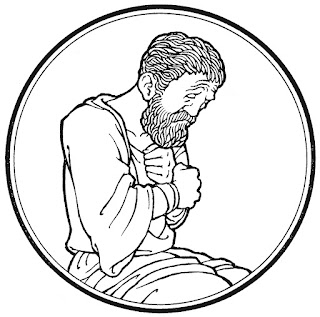
Commemoration of Patrick, Missionary to Ireland


Today we remember and give thanks for Patrick, Missionary to Ireland.  Patrick is one of the best-known of the missionary saints. Born to a Christian family in Britain around the year 389, he was captured as a teenager by raiders, taken to Ireland, and forced to serve as a herdsman. After six years he escaped and found his way to a monastery community in France. Ordained a bishop in 432, he made his way back to Ireland, where he spent the rest of his long life spreading the Gospel and organizing Christian communities. He strongly defended the doctrine of the Holy Trinity in a time when it was not popular to do so. His literary legacy includes his autobiography, Confessio, and several prayers and hymns still used in the church today. Patrick died around the year 466.

Collect of the Day:

Almighty and everlasting God, we thank you for your servant Patrick, whom you called to preach the Gospel to the people of Ireland. Raise up in this and every land evangelists and heralds of your kingdom, that your Church may proclaim the unsearchable riches of our Savior Jesus Christ; who lives and reigns you You and the Holy Spirit, one God, now and forever.


Wednesday, March 16, 2022

Sermon for second mid-week Lent service - Second Article - Jn 1:1-18


Mid-Lent 2

                                                                                      Second Article

                                                                                      Jn 1:1-18

                                                                                      3/16/22


           During the years 93-94 A.D. a Jew named Josephus wrote a work called the Jewish Antiquities.  Josephus had fought in the Jewish revolt that began in 66 A.D. He had been captured by the Romans, but had managed to ingratiate himself to the Roman Emperors who then served has his patrons.  His work provides one of the most important pieces of historical evidence that we have about events in Palestine during the first century.

          In the twentieth chapter he writes: “Being therefore this kind of person, Ananus, thinking that he had a favorable opportunity because Festus had died and Albinus was still on his way, called a Sanhedrin of judges and brought into it the brother of Jesus who is called Messiah, James by name, and some others.  He made the accusation that they had transgressed the law, and he handed them over to be stoned.”

          Now Josephus is making the point that the Jewish leader did something illegal. The Jews weren’t allowed to execute people on their own, but since the Roman governor Festus had died and the new one Albinus had not yet arrived, he used this opportunity to have James stoned.

          But what catches our attention is the fact that James is described as being “the brother of Jesus who is called Messiah.”  James is identified in relation to Jesus because two chapters earlier Josephus had spoken about a Jesus who was a wise man, a doer of startling deeds, who had gained a following. Josephus says that because of an accusation made by leading men, Pilate had condemned Jesus to the cross.

          This evidence from Josephus simply confirms what we find in the Second Article of the Apostles’ Creed.  It is says that Jesus was a real man who lived in Palestine at the beginning of the first century A.D.  The Roman governor Pontius Pilate had him executed by crucifixion, a process that involved great suffering.

          Jesus was a real man – a real human being. The reference to Pontius Pilate in the Creed anchors the events being described in history. This is not a myth for which the questions when and where did it happen are nonsensical. Instead, it happened in Palestine in the first century. 

          What Josephus tells us also fits with what we find in the New Testament which clearly tells us that Jesus was a real human being.  In the Gospel lesson for the First Sunday in Lent we learned that after fasting forty days and forty nights, Jesus was hungry.  You would be too, because that’s what happens when a person doesn’t eat for that long.  We learn that Jesus got tired.  When the storm arose on the Sea of Galilee that threatened to sink the boat, where was Jesus?  He was at the stern of the boat asleep on a cushion because he was worn out by his work of ministry. We learn that Jesus had human emotions – he wept at tomb of his friend Lazarus who had just died.    

          Ultimately, we see that Jesus was a real human being – that he was truly a man – because he died. That’s what happens to human beings.  Josephus tells us that Pilate condemned him to the cross. The Gospels narrate what any first century reader knew this meant. Jesus was scourged with a whip studded with lead or bone that shredded skin and muscle. He was nailed to a cross in manner that caused slow asphyxiation, and left there to die.  A person that the Romans raised up on a cross came down in only one way – dead.

          But if that was all there was to say about the person of Jesus, we would not be here tonight.  He would have been just one more person who died at the hands of the Romans.  However, our text tells us that while Jesus was a man, he was also far more.

          John starts by writing: “In the beginning was the Word, and the Word was with God, and the Word was God. He was in the beginning with God. All things were made through him, and without him was not any thing made that was made.”  From elsewhere in the Gospel of John and the New Testament we know that when John refers to “the Word,” he means the Son of God, the second person of the Holy Trinity.  The Word – the Son – is God. John tells us that all things were made through him.

          And then John tells us the incredible truth that we celebrated at Christmas: “And the Word became flesh and dwelt among us, and we have seen his glory, glory as of the only Son from the Father, full of grace and truth.” We learn that the Word – the Son of God – became flesh and dwelt among us.  John is saying that the Son of God became a man.  He uses the language of the tabernacle and temple to explain the fact that in the person of Jesus Christ, God dwelt in our midst.

          Paul describes this truth in Galatians when he says, “But when the fullness of time had come, God sent forth his Son, born of woman, born under the law, to redeem those who were under the law, so that we might receive adoption as sons.”  God sent forth his Son into this world.  He did so as he was born of a woman.

          Now women give birth to sons all the time.  But God sending his Son to be born as a man – the Word becoming flesh – was no ordinary occurrence. It was God acting in a dramatic way to bring us salvation. The angel Gabriel announced to Mary, “And behold, you will conceive in your womb and bear a son, and you shall call his name Jesus. He will be great and will be called the Son of the Most High. And the Lord God will give to him the throne of his father David, and he will reign over the house of Jacob forever, and of his kingdom there will be no end.” 

When Mary asked how this was going to happen since she was a virgin, Gabriel responded, “The Holy Spirit will come upon you, and the power of the Most High will overshadow you; therefore the child to be born will be called holy--the Son of God.” This was the same truth that was shared with Joseph by an angel in a dream when he said:Joseph, son of David, do not fear to take Mary as your wife, for that which is conceived in her is from the Holy Spirit. She will bear a son, and you shall call his name Jesus, for he will save his people from their sins.”

The explanation of the Second Article in the Small Catechism begins by saying, “I believe that Jesus Christ, true God, begotten of the Father from eternity, and also true man, born of the Virgin Mary, is my Lord.”  Jesus is true God.  He is also true man. That is the mystery of the incarnation – of the Word become flesh.

Logically, these do not go together.  It is beyond our understanding. And so, people have always tried to deny or minimize one side or the other.  The earliest was a denial that Jesus Christ really was a man.  John wrote in his first letter, “Beloved, do not believe every spirit, but test the spirits to see whether they are from God, for many false prophets have gone out into the world. By this you know the Spirit of God: every spirit that confesses that Jesus Christ has come in the flesh is from God, and every spirit that does not confess Jesus is not from God.”

Later, some like the heretic Arius tried to deny that the Son who became incarnate is truly God. But because of what Scripture says the Church rejected this and every Sunday we explicitly confess that the Son who became incarnate it truly God when we say in the Nicene Creed that the Son is “God of God, Light of Light, very God of very God, begotten, not made, being of one substance with the Father.”

God’s word reveals that Jesus is “true God, begotten of the Father from eternity, and also true man, born of the Virgin Mary.”  He is true God – God in every possible way.  He is true man, like us in all ways except for one – he has no sin. Sin is not inherently part of human nature.  Adam and Eve were created in the image of God, and so had no sin.  It was only the Fall – the sin of Adam and Eve – that corrupted human nature. Everyone conceived and born in the natural way since then has been sinful – all of us. But Jesus’ human nature is what we were originally created to be.  He is the second Adam sent to restore our humanity to what God intended us to be.

Jesus Christ is true God and true man.  St. Paul says in First Timothy, “For there is one God, and there is one mediator between God and men, the man Christ Jesus, who gave himself as a ransom for all, which is the testimony given at the proper time.” The person of Jesus Christ – who he is – is directly tied to his work – what he came to do.  After all, when the angel announced to Joseph about the conception through the work of the Holy Spirit he said of Jesus, “he will save his people from their sins.”

We will focus next week on the work that Jesus Christ has carried out.  But Paul sums it up when he says that he gave himself “as a ransom for all.”  We will see during Holy Week that Jesus died on the cross to pay the penalty for our sins. He did this to win forgiveness for us. But he also had come to renew our humanity – to free us from death.  And so on the third day – on Easter - God raised Jesus from the dead with a body that can never die again. 

Because we have been baptized into Jesus’ saving death, we know that we will also share in his resurrection.  Paul told the Romans, “We were buried therefore with him by baptism into death, in order that, just as Christ was raised from the dead by the glory of the Father, we too might walk in newness of life. For if we have been united with him in a death like his, we shall certainly be united with him in a resurrection like his.”  We will share in this resurrection when Christ returns in glory on the Last Day, and raises and transform our bodies to be like his.


Sunday, March 13, 2022

Sermon for the Second Sunday in Lent - Reminiscere - Mt 15:21-28


Lent 2

                                                                                      Mt 15:21-28

                                                                                      3/13/22


“I was sent only to the lost sheep of the house of Israel.” Excuse me. What was that?  Did I miss something there? 

“I was sent only to the lost sheep of the house of Israel.” Yes, that’s exactly what Jesus says to the Canaanite woman in our text this morning.  And it is no mistake.  This is not like where our political leaders say something that is false and misleading, and then later they try to explain it away by saying that they “misspoke.”

Jesus really means this, and it is not the first time he had said it.  In chapter ten our Lord sends out the twelve apostles on a mission trip in which they are to proclaim as they go, saying, “The kingdom of heaven is at hand.” They are to heal the sick, raise the dead, cleanse lepers, and cast out demons. And as Jesus sends them out he gives these instructions: "Go nowhere among the Gentiles and enter no town of the Samaritans, but go rather to the lost sheep of the house of Israel.”

We are confronted here by a reality that we often overlook.  Jesus came as Israel’s Messiah.  Matthew begins his Gospel by giving the genealogy of Jesus whom he describes as “the son of David, the son of Abraham.” He starts this list by saying, “Abraham was the father of Isaac, and Isaac the father of Jacob, and Jacob the father of Judah and his brothers.”  Judah and his brothers – those are the twelve tribes of Israel. That is the people God took into a covenant at Mt Sinai. When Matthew then continues to trace the lineage from Judah through David to Jesus, he is telling us that Jesus is Israel’s Messiah. 

Jesus came as the fulfillment of God’s promises to Israel.  Israel was God’s people.  If you did not descend from Abraham, Isaac, and Jacob, then you were not  Matthew make it clear that the focus of Jesus’ ministry was to Israel as her Messiah.

However, in our text we do not find Jesus in Israel.  Instead, he is in the region of Tyre and Sidon.  Just before our text, our Lord has had a confrontation with the Pharisees. They have asked him, “Why do your disciples break the tradition of the elders? For they do not wash their hands when they eat.”  Now this washing of the hands had nothing to do with health concerns.  It was instead an example of how the Pharisees had taken aspects of the Law that were directed only to priests and applied to it all people. Things got heated as Jesus said, “You hypocrites! Well did Isaiah prophesy of you, when he said: ‘This people honors me with their lips, but their heart is far from me; in vain do they worship me, teaching as doctrines the commandments of men.’”

So as he does several times after a sharp confrontation like this, Jesus withdraws to a different area.  Our Lord has a mission and a timing.  He is to die in Jerusalem at the time of the Passover. He is to die during Holy Week for which the season of Lent prepares us. And so he prevents any kind of premature event by leaving to another place.

In the area of Tyre and Sidon, we find Jesus in the very opposite of Israel.  This region north of Israel had always been pagan territory.  It had been the home of Jezebel, the daughter of the king of the Sidonians, who married Ahab the king of Israel. She had vigorously promoted the worship of Baal as she tried to kill the prophet Elijah.

This is the last place where we expect a person to appeal to Israel’s Messiah. Yet in our text we hear: “And behold, a Canaanite woman from that region came out and was crying, ‘Have mercy on me, O Lord, Son of David; my daughter is severely oppressed by a demon.’”  Matthew calls her a “Canaanite” woman which in the first century A.D. was an anachronistic term.  It would be like today calling someone from Mississippi a “Confederate” woman.  But the description is intentional because it is a term that reinforces the pagan associations of the area.

The woman’s appeal is remarkable because not only does she call Jesus “Lord,” but she also addresses him as “Son of David.”  She uses a term that identifies Jesus as the Messiah – Israel’s Messiah.  Word about Jesus had traveled throughout the region of Palestine. This woman had heard about Jesus, Israel’s Messiah who had the power to heal. And so she appeals to him to help her daughter who is afflicted by a demon.

Jesus’ response seems shocking: he completely ignored her. He did not answer her a word. It is apparent that the woman continued to cry out to Jesus for help because his disciples came and begged him, saying, “Send her away, for she is crying out after us.”  They seemed to be asking Jesus to heal the woman’s daughter so that she would just leave them alone. But Jesus didn’t do it.  Instead, he answered, “I was sent only to the lost sheep of the house of Israel.”

Yet the woman had faith in Jesus that he could help her daughter. So she came and knelt before him, saying, “Lord, help me.”  Yet rather than helping her, Jesus answered, “It is not right to take the children's bread and throw it to the dogs.” He called her a dog, in a culture where the animal did not have any of the positive connotations that we associate with our family pets.

Surely this would finally prompt the woman to give up.  But instead, she replied, “Yes, Lord, yet even the dogs eat the crumbs that fall from their masters' table.”  She did not deny her status as a Gentile.  She did not claim that she had a right to help from Jesus, Israel’s Messiah.  But what she did assert was that Jesus was so powerful and mighty that even scraps of what he had to offer were more than sufficient to heal her daughter. 

Then Jesus answered her, “O woman, great is your faith! Be it done for you as you desire.” He praised the woman and left no doubt that he continuing appeal to Jesus was one of true faith. And we learn that her daughter was healed instantly.

Today’s Gospel lesson is one that seems challenging.  We don’t see Jesus act as we expect him to do so. He doesn’t seem to be the loving, caring Savior.  But there are very important lessons in our text that teach us about how, at times, God deals with us.

The first thing we learn from the woman is the manner in which we must approach God.  Jesus called her a dog.  He said that she was completely unworthy of his help. We must confess that the same thing is true of us.  In the dispute with the Pharisees that prompted Jesus to withdraw to the region of Tyre and Sidon, the topic had been what defiles a person.  Our Lord said that it was not some particular food banned by religious law that did so.  He said: “But what comes out of the mouth proceeds from the heart, and this defiles a person. For out of the heart come evil thoughts, murder, adultery, sexual immorality, theft, false witness, slander.”

This describes us.  We are sinners who spew forth sin in every possible way.  We try to find ways to justify and excuse our sin. We are so sinful that we don’t even recognize all of the ways we sin in thought, word, and deed.  We have no right to be with God, much less ask for God’s help.  This is what we must confess about ourselves. This is what we must confess before God.

The second thing we learn is that the woman clung to what she had heard about Jesus. She had heard the Gospel. She had heard God’s Word, which was the word about Jesus. And she believed.  She believed in Jesus because of this word and she would not let go of faith in Christ no matter what happened.

You have heard the Gospel.  St Paul told the Romans, “So faith comes from hearing, and hearing through the word of Christ.”  You have heard that Jesus Christ died on the cross to in order to redeem you – to free you from sin.  You have heard that on the third day God raised Jesus from the dead.  Through this action he vindicated Jesus as the Messiah, and defeated death.  God has used that word to call you to faith in Jesus.  As Peter said, “you have been born again, not of perishable seed but of imperishable, through the living and abiding word of God.”  This word is living and abiding because it is the means that the Holy Spirit uses to create and sustain faith.

You believe in Jesus Christ as your risen Lord and Savior. You are the baptized child of God who is forgiven and has salvation.  But what we see in the woman’s experience is the way that God sometimes deals with us.  When he preached on this text, Martin Luther commented, “But see how Christ drives and pursues faith in His people, so that it becomes strong and firm.”

In our lives, we encounter circumstances that make it seem as if God does not love and care for us.  If God loves me, why did he allow me to get cancer, or have a stroke, or get diabetes?  If God loves me, why is he allowing my family member to experience these hardships?  If God loves me, why am I facing such uncertainty about my future?

But God’s Word – his word of the death and resurrection of Jesus Christ for you – remains.  It stands firm.  God allows these things that seem to be a denial of everything he says about his love for us because they force us to cling yet more firmly to the word – to Christ.  As Luther said, “This was written for all our comfort and instruction, so that we may know how deeply God hides His grace from us, so that we would not consider Him according to our perception and thinking but strictly according to His Word.”

Like the woman, we have heard the word about Christ. What is more we know the whole story. We know about the death and resurrection of Christ. We know that though Jesus was sent as Israel’s Messiah, Israel’s Messiah was ultimately sent to carry out a mission that brings salvation to all people.  Jesus may say in our text, “I was sent only to the lost sheep of the house of Israel.”  But as the fulfillment of what Israel was meant to be for the nations, he told his disciples after his resurrection: “Go therefore and make disciples of all nations, baptizing them in the name of the Father and of the Son and of the Holy Spirit, teaching them to observe all that I have commanded you.” 

There will be times when God allows us to experience things that force this faith to deepen, grow, and mature.  The woman in our text this morning provides the example of what this looks like.  She believed in Jesus. She declared that he was the Messiah.  Even when it seemed like she was being rejected, she pressed on toward Jesus in faith.  She confessed her unworthiness, and but also believed that Jesus was so powerful that even the smallest help from him was more than sufficient.

Our faith in Jesus Christ does the same. Through the work of the Spirit, we have been brought to faith in the Lord who died for our sins, and was raised from the dead.   In him we find the “yes” of God’s love that overcomes every “no” that we are experiencing.  In the midst of those times, we cling ever more strongly to Jesus. We do not turn away, but instead focus our lives even more on those ways by which he comes to us with the promise of his faith sustaining Spirit – in his Word, in Holy Baptism, and in the Sacrament of the Altar.  We believe and trust in Jesus to bring us through those times, because he died for us and now lives as our risen Lord.  


Wednesday, March 9, 2022

First mid-week Lent sermon - First Article - Gen 1:1-31


Mid-Lent 1

                                                                                      First Article

                                                                                      Gen 1:1-31

                                                                                      3/9/22


          “I believe in God, the Father Almighty, Maker of heaven an earth.”  The First Article of the Apostles’ Creed is very short – it’s only twelve words long.  But what it encompasses is mind boggling.  It is confessing the truth of God’s Word that God is the Creator of everything – heaven and earth – the entire cosmos.

          The First Article is, as we find in our text tonight, also the first verse of the Bible: “In the beginning, God created the heavens and the earth.” In Genesis chapter one we see that God creates through the power of his Word.  He says, “let there be,” and there it is.

          Genesis chapter one and the First Article of the Creed establish a very important starting point that separates the biblical worldview from much of what has existed, and still exists today, in human thought.  It tells us the God is the Creator and creation is what he has made.  There is fixed distinction between them that cannot be bridged.  God and creation are not in some way joined together. Creation is not in any way divine. Instead, God is the Creator who is over his creation. He rules it.  He controls it.  And as we will see, he also provides through it.

          We learn from Genesis one that God made a material creation – a physical creation.  It is a place of land and water, plants and trees, fish and birds, livestock and creeping things.  And we find that in God’s view this material creation is good.  The refrain runs throughout chapter one, “And God saw that it was good.”  And then finally we hear in the last verse of our text, “And God saw everything that he had made, and behold, it was very good.”  Very good. That’s what God thinks about the material world he made.  God’s word tells us that it is good stuff.

          We see this fact also in the crown of his creation: man.  We hear in our text, “Then God said, ‘Let us make man in our image, after our likeness. And let them have dominion over the fish of the sea and over the birds of the heavens and over the livestock and over all the earth and over every creeping thing that creeps on the earth.’ So God created man in his own image, in the image of God he created him; male and female he created them.”

          Man alone was created in the image of God.  He alone was created to be like God. He was created to know God as God wants to be known.  He was created to live perfectly in tune with God’s will – his ordering of creation. And created in God’s image, he was God’s representative in the midst of creation.  Man and creation are not on the same level. The world may claim that we are just one part of the big “circle of life,” but we are not.  God gave man dominion over creation.

          God created man as a pairing – he created man as male and female.  We learn more about this act of creation in chapter two when we read, “Then the LORD God formed the man of dust from the ground and breathed into his nostrils the breath of life, and the man became a living creature.”  God created the man’s body and then breathed into him the breath life.  He made physical body and joined it with what Jesus called the soul.  In the unity of body and soul we are what God intends us to be.

          And then God did more.  We learn that in the midst of what was very good, there was one thing that was not good.  God said, “It is not good that the man should be alone; I will make him a helper fit for him.”  God created woman from man.  He created Eve from Adam, as the one who perfectly corresponded to Adam. That correspondence was demonstrated in the way they were created for sexual union – for becoming one flesh.  By creating this matching pair God instituted marriage, for we learn in chapter two: “Therefore a man shall leave his father and his mother and hold fast to his wife, and they shall become one flesh.”

          This is what God did as the Maker of heaven and earth.  But the First Article of the Creed also teaches us that this was not the end of God’s creative work.  Instead, God has continued to create.  The writer to the Hebrews tells us about the Son of God, “He is the radiance of the glory of God and the exact imprint of his nature, and he upholds the universe by the word of his power.”  God is the One who sustains creation – who keeps it running and provides through it.  For this reason the Psalmist writes, “The eyes of all look to you, and you give them their food in due season. You open your hand; you satisfy the desire of every living thing.”

          This means that God is the Creator and giver of my body and life.  The explanation in the Small Catechism says, “I believe that God has made me and all creatures; that He has given me my body and soul, eyes, ears, and all my members, my reason and all my senses, and still takes care of them.”  Notice how the language is very specific in saying that God has given us our body, eyes, ear, and all our members.  That means the body God has given to me – a body that is male or female – is his gift.  It is how he has defined me and therefore any attempt to reject that body as being the “wrong one” is a rejection of his gift, and a demonstration that the mind is not healthy. This is a condition that we need to address in love and support as we speak the truth – the same way we would help a person suffering from any form of mental illness.

          As the God who continues to create, God provides us with the things we need for life. The Small Catechism says, “He also gives me clothing and shoes, food and drink, house and home, wife and children, land, animals, and all I have.  He richly and daily provides me with all that I need to support this body and life.”  We are called to trust that God will give what we need to live, even it is not all that we want.   We are to be content with the blessings God gives. Jesus said, Therefore do not be anxious, saying, ‘What shall we eat?’ or ‘What shall we drink?’ or ‘What shall we wear?’ For the Gentiles seek after all these things, and your heavenly Father knows that you need them all. But seek first the kingdom of God and his righteousness, and all these things will be added to you.”

          Tonight we consider the First Article of the Creed. Of course, “First,” indicates that there are more Articles.  There are more Articles because while God continues to create and provide, our life and creation itself have been damaged by the entrance of sin into the world through the Fall.  The words of Ash Wednesday last week, “Remember that you are dust and to dust you shall return” echo God’s words to Adam.  He had told him, “You may surely eat of every tree of the garden, but of the tree of the knowledge of good and evil you shall not eat, for in the day that you eat of it you shall surely die.” Now that Adam had done so, God said, “By the sweat of your face you shall eat bread, till you return to the ground, for out of it you were taken; for you are dust, and to dust you shall return.”

          And the damage caused by Adam’s sin was not limited to us.  Creation itself has been warped and twisted by sin.  St. Paul told the Romans, “For the creation was subjected to futility, not willingly, but because of him who subjected it, in hope that the creation itself will be set free from its bondage to corruption and obtain the freedom of the glory of the children of God.”

          During the season of Lent, we are preparing to remember again what God did in order to provide the answer to sin, death and the fallenness of creation.  When sin entered into the world bringing death to us and corruption to all creation, God did not walk away from what he had made.  It was no longer very good.  But rather than abandoning it, he did something incredible.  He himself entered into that creation as the Son of God was sent by the Father to be conceived by the Holy Spirit and born of the virgin Mary.

          God showed that he still considered our bodily existence to be very good, because the Son of God himself had a body as the One who is true God and true man. As Paul told the Colossians about Christ, “For in him the whole fullness of deity dwells bodily.”  Jesus Christ came as the second Adam.  Because the holy and just God punishes sin, Jesus died on Good Friday and received God’s judgment against sin. St. Paul told the Romans, “Therefore, as one trespass led to condemnation for all men, so one act of righteousness leads to justification and life for all men. For as by the one man's disobedience the many were made sinners, so by the one man's obedience the many will be made righteous.”

          Our sin brought death for Jesus.  But Jesus the second Adam passed through death in order to kill it. On the third day – on Easter – God raised Jesus from the dead.  He rose with a body that can never die again. The resurrection of Jesus began the transformation in which we will all share.  Paul told the Corinthians, “For as by a man came death, by a man has come also the resurrection of the dead. For as in Adam all die, so also in Christ shall all be made alive. But each in his own order: Christ the firstfruits, then at his coming those who belong to Christ.”

          And this saving action is not limited to us.  Instead, in Romans Paul says, “creation itself will be set free from its bondage to corruption and obtain the freedom of the glory of the children of God.” He identifies the return of Christ and our resurrection as the time when this will take place

          God will give us bodies that can never die again. He will give us a creation that is renewed in which to live.  He will make all things very good once again.  And this will all take place because of the events we are preparing to remember.  It will because Jesus Christ suffered and died in his Passion on Good Friday, and rose from the dead on Easter.


Mark's thoughts: What kind of sinner are you?


All people are sinners. Ever since the Fall of Adam and Eve, we have been conceived and born as sinners.  Jesus said, “That which is born of the flesh is flesh, and that which is born of the Spirit is spirit” (John 3:6).  Sinful fallen nature gives birth to sinful fallen nature.  We enter into this world as people who do not know God – who cannot know God.  St. Paul wrote, “The natural person does not accept the things of the Spirit of God, for they are folly to him, and he is not able to understand them because they are spiritually discerned” (1 Corinthians 2:14).


No parent has ever had to teach their child how to be jealous, to lie, or to be angry.  It is already there, because we are sinners.  As we grow in our abilities as people, so do the ways that sin manifests itself.  Jesus said, “What comes out of a person is what defiles him. For from within, out of the heart of man, come evil thoughts, sexual immorality, theft, murder, adultery, coveting, wickedness, deceit, sensuality, envy, slander, pride, foolishness. All these evil things come from within, and they defile a person” (Mark 7:20-23).


The final confirmation that every person is a sinner is found in the fact that, apart from the return of Jesus Christ, every person will die.  Paul told the Romans that “the wage of sin is death” (Romans 6:23).  This link between sin and death goes back to the beginning – back to the first sin of Adam.  The apostles says, “Therefore, just as sin came into the world through one man, and death through sin, and so death spread to all men because all sinned” (Romans 5:12).


The true issue, then, is not whether you are a sinner – you are.  The real question is what kind of sinner are you?  Jesus began his ministry by saying, “The time is fulfilled, and the kingdom of God is at hand; repent and believe in the gospel” (Mark 1:15).  Peter preached on the Day of Pentecost: “Repent and be baptized every one of you in the name of Jesus Christ for the forgiveness of your sins, and you will receive the gift of the Holy Spirit. For the promise is for you and for your children and for all who are far off, everyone whom the Lord our God calls to himself” (Acts 2:38-39). 

All people are sinners. But there are two kinds of sinners.  There are sinners who repent of their sin – who confess it before God – and believe in Jesus Christ for the forgiveness of sins.  Then there are sinners who do not repent, and instead are entirely content to continue sinning. The first group of sinners are saints and sinners at the same time.  In themselves they are people who continue to struggle with sin. But through baptism and faith they live as people who are “in Christ,” and so when God looks at them he sees not their sin but instead Christ who has won forgiveness for their every sin.  Because they are in Christ, God views them as saints – as holy ones.  On the other hand, those who do not repent are simply sinners in God’s eyes, and if they remain in that status until death they will receive the judgment of damnation.

The season of Lent is a season of repentance.  It reminds us that while yes, we are sinners, our life as Christians is one in which we are repentant sinners.  We confess our sins before God.  And in turn, the season of Lent prepares us to remember the events of Holy Week and Easter.  We remember that Jesus Christ suffered and died as the sacrifice for our sin.  But then on Easter, God raised him from the dead as he vindicated the crucified Christ as Lord and defeated death. Through faith in the Christ, who was crucified and rose from the dead for us, we have forgiveness and resurrection on the Last Day. Repentant sinners are the children of God who have the assurance of salvation.