Sunday, January 9, 2022

Sermon for the Baptism of Our Lord - Mt 3:13-17


Baptism of Our Lord

                                                                            Mt 3:13-17

                                                                            1/9/22


          Most merciful God, we confess that we are by nature sinful and unclean.  We have sinned against You in thought, word, and deed, by what we have done and by what we have left undone.  We have not loved You with our whole heart; we have not loved our neighbors as ourselves.  We justly deserve Your present and eternal punishment.

          These are the words that you just spoke at the start of the service.  Every Sunday we begin the Divine Service by confessing our sin.  As we prepare to come before the holy God we begin by confessing our sinful status and the sins we have committed.  The Lutheran service did not always begin this way, since there were several centuries when those who were going to commune had gone to private confession in the days before the service. But this is the only practice any of us have ever known.  And it certainly makes sense.  We come as repentant sinners who are here at the Divine Service to receive God’s forgiveness in a variety of ways through his Means of Grace.

          Repentance was the theme as well for all who came to receive the baptism administered by John the Baptist.  Matthew tells us, “In those days John the Baptist came preaching in the wilderness of Judea, ‘Repent, for the kingdom of heaven is at hand.’”  John called all the Jews to repent because the kingdom of heaven – the end time reign of God was about to arrive. 

God was coming with his end time judgment and people needed to be ready. God’s final judgment always possesses two sides.  It is salvation for those who receive him in repentance and faith, and damnation for those who remain in their sin. John called people to repent so that the arrival of God’s end time reign would mean salvation for them.  Many people took John’s message to heart.  Matthew reports, “Then Jerusalem and all Judea and all the region about the Jordan were going out to him, and they were baptized by him in the river Jordan, confessing their sins.”

I have mentioned several times recently that what made John truly unusual was that he administered this baptism to others.  Unlike other washings present in Judaism it was not self-administered.  Instead, John did the baptizing and by receiving John’s baptism people demonstrated that they were truly repentant as they looked for God’s reign to arrive.

Our text begins with the words, “Then Jesus came from Galilee to the Jordan to John, to be baptized by him.”  We have heard these words so many times that it is easy to overlook an important factor.  It is one thing to say that people from Jerusalem and Judea were going out to John to be baptized. After all, John was in the vicinity of Judea, carrying out his baptizing ministry in the wilderness on the other side of the Jordan.

However, Matthew tells us that Jesus came from Galilee to be baptized by John.  This was about a sixty mile trip that Jesus probably made by walking.  It took some real effort for Jesus to go to John.  This tells us that receiving John’s baptism was very important to Jesus.

As John called people to repentance in preparation for the arrival of God’s reign, he proclaimed a powerful figure who was coming after him, “I baptize you with water for repentance, but he who is coming after me is mightier than I, whose sandals I am not worthy to carry. He will baptize you with the Holy Spirit and fire. His winnowing fork is in his hand, and he will clear his threshing floor and gather his wheat into the barn, but the chaff he will burn with unquenchable fire.”

When Jesus showed up to receive John’s baptism, John was confused. In fact, John wanted to prevent it as he said,I need to be baptized by you, and do you come to me?” Why would Jesus be coming to John to receive his baptism? John didn’t understand, but Jesus had not travelled sixty miles for no reason.  He answered, “Let it be so now, for thus it is fitting for us to fulfill all righteousness.”

Jesus said that John needed to baptize, and that Jesus needed to receive John’s baptism. This was fitting – it was the role that each was to play in order to fulfill all righteousness.  In the Old Testament “righteousness” is a word that describes God’s saving action to put all things right.  Jesus was telling John that the reception of John’s baptism was a necessary part of God’s saving action.

Persuaded by Jesus, John baptized him.  Jesus went up from the water and we learn in our text, “behold, the heavens were opened to him, and he saw the Spirit of God descending like a dove and coming to rest on him; and behold, a voice from heaven said, ‘This is my beloved Son, with whom I am well pleased.’”

Jesus received John’s baptism that was tied to repentance.  But the events that occurred immediately after the baptism demonstrated that this was not “just another baptism.”  First Jesus saw the heavens opened and the Holy Spirit descending like a dove and coming to rest on him. Second, the voice of God the Father was heard saying, “This is my beloved Son, with whom I am well pleased.”

The words of the Father and the descent of the Spirit were the fulfilment of Isaiah 42:1 which says, “Behold my servant, whom I uphold, my chosen, in whom my soul delights; I have put my Spirit upon him; he will bring forth justice to the nations.” God identified Jesus as the Servant of the Lord. In Isaiah, the servant is the nation of Israel, and Jesus as the Christ would be Israel reduced to One who would fulfill what Israel was meant to be. 

But the servant in Isaiah is also an individual.  He is the suffering Servant about whom Isaiah says in chapter 53, “All we like sheep have gone astray; we have turned--every one--to his own way; and the LORD has laid on him the iniquity of us all.” Jesus Christ, the Son of God who has not sin, goes to receive John’s baptism of repentance.  In doing so he takes on the role that fulfills all righteousness – that will bring God’s salvation to put all things right.  Our Lord joins other sinners in the water, so that he can take their place – so that he can take our place. 

We see a paradox here – a paradox that will characterize Jesus’ entire ministry.  Two mighty and dramatic events occur at Jesus’ baptism. The Spirit descends and comes to rest on Jesus. The Father declares, “This is my beloved Son, with whom I am well pleased.”  But this baptism makes Jesus the One who will bear the sins of all.  From the moment of Jesus’ baptism, his life and ministry were on a one way path to the cross. It sets Jesus on the course of suffering and death for you and for me.  He does this to save us – take away our sins.  As Jesus will say, “the Son of Man came not to be served but to serve, and to give his life as a ransom for many.”

Jesus was faithful to the mission that God the Father had given him as the suffering servant.  Repeatedly he told the disciples that he was going to die.  Matthew tells us later in the Gospel, “As they were gathering in Galilee, Jesus said to them, ‘The Son of Man is about to be delivered into the hands of men, and they will kill him, and he will be raised on the third day.’” 

Because we are sinners who must confess what I read at the beginning of the this sermon, Jesus died as the sacrifice for our sins on the cross. As Isaiah had said, “my servant, make many to be accounted righteous, and he shall bear their iniquities.”  Because of Jesus death on the cross for our sins, we are now accounted righteous before God – we are justified. And because of Jesus’ resurrection we know that death has been defeated.  We know that Jesus will raise us up on the Last Day.

As far as we know, John the Baptist was the first person to baptize others.  Jesus received John’s baptism, died on the cross, and rose from the dead. As the crucified and risen Lord, he then took John’s baptism and transformed it.  Jesus made it his own when after his resurrection he told the disciples, “Go therefore and make disciples of all nations, baptizing them in the name of the Father and of the Son and of the Holy Spirit, teaching them to observe all that I have commanded you.”

Jesus entered into the water of baptism in order to take on our sins and go to his death.  We now receive the water of the baptism Jesus instituted in order to lose our sins and to live.  Paul told the Romans, “Do you not know that all of us who have been baptized into Christ Jesus were baptized into his death? 

We were buried therefore with him by baptism into death, in order that, just as Christ was raised from the dead by the glory of the Father, we too might walk in newness of life. For if we have been united with him in a death like his, we shall certainly be united with him in a resurrection like his.”

          Paul says that through baptism we shared in Jesus’ saving death.  The forgiveness that he won has become ours.  Yet at the same time, the apostle says that our baptism give us life in two ways.  First, he says, “just as Christ was raised from the dead by the glory of the Father, we too might walk in newness of life.”  The apostle is referring to the fact that the Spirit who raise Jesus from the dead is the One who has given us the washing of regeneration and renewal. 

Your baptism is the source of the Spirit’s continuing work in your life.  As Paul goes on to say, “Let not sin therefore reign in your mortal body, to make you obey its passions. Do not present your members to sin as instruments for unrighteousness, but present yourselves to God as those who have been brought from death to life, and your members to God as instruments for righteousness.”  Through God’s gift of baptism we receive the Spirit’s continuing work in our life that enables us to love and serve others, just as Jesus loved and served us when he took our sin and died on the cross.

The second way that baptism gives us life is that it provides the assurance of our resurrection.  Paul says, “For if we have been united with him in a death like his, we shall certainly be united with him in a resurrection like his.”  In baptism we have been buried with Christ. But our Lord Jesus did not remain in the tomb.  On Easter he rose from the dead and went forth as the exalted Lord.  Since we have shared in Jesus’ death through baptism, baptism also provide the guarantee that we too will share in Jesus’ resurrection when he returns in glory on the Last Day.

Jesus traveled some sixty miles to receive baptism from John. He did this because the paradoxical act of the sinless Son of God receiving a baptism of repentance was necessary to fulfill all righteousness – to carry out the saving action of God to put all things right.  Through this action Jesus took on the role of the Servant of the Lord.  He entered into the water of the Jordan in order to take our sins as his own.  He went into the water into order to die on the cross as the ransom for us.

Yet in his resurrection Jesus has defeated death.  And now through baptism we receive not only the forgiveness of sins, but also the work of the Spirit who raised Jesus from the dead. The Spirit leads us to live the life of love and service Christ has shown to us.  And the Spirit is the One who will raise us up on the Last Day, just as he raised Jesus. Through baptism we have shared in the death of the risen Lord, and so we know that the we will also share in his resurrection.


Thursday, January 6, 2022

Sermon for the Feast of the Epiphany of Our Lord - Eph 3:1-12


Epiphany

                                                                            Eph 3:1-12

                                                                           1/6/22


          You are citizens of the United States of America.  You can get a passport that can be used to demonstrate anywhere in the world that you have this status. Now this is probably something that we take for granted. After all, we were born here. We have always been Americans.

          But the actions of others should remind us that being a citizen of the United States is in fact a very big deal.  Last year, 808,000 people became naturalized American citizens. During the last decade 7.4 million people have done this.  And of course, we are also aware that many people attempt to get into the United States just to be here, even if they do not have a legal status to do so.

          The Feast of the Epiphany of Our Lord is the yearly reminder that almost all of us take for granted our status of being part of God’s people.  We know that we are baptized Christians. We know that we are sons and daughters of God because of Christ.

          Yet this attitude demonstrates that we are often quite oblivious to the fact that most of us have no actual right to this claim.  Our status as God’s people is not like the manner in which we are citizens of the United States. Instead, it is like that of naturalized American citizens who have come in from outside this country.  We have received something to which we did not have a natural and rightful claim. We have received a gracious gift from God.

          In our text the apostle Paul speaks about a mystery.  It is something had not been made known clearly in the past, but now has been revealed. He begins by saying, “For this reason I, Paul, a prisoner for Christ Jesus on behalf of you Gentiles-- assuming that you have heard of the stewardship of God's grace that was given to me for you, how the mystery was made known to me by revelation, as I have written briefly.” Paul says that by God’s grace he knows a mystery that has been made known to him by revelation.

          This mystery has a very specific content.  It is the mystery of Christ and the apostle says that it “was not made known to the sons of men in other generations as it has now been revealed to his holy apostles and prophets by the Spirit.”  The Spirit has now revealed the mystery, and Paul defines this mystery very clearly when he says, “This mystery is that the Gentiles are fellow heirs, members of the same body, and partakers of the promise in Christ Jesus through the gospel.”

          Now to us, that doesn’t sound like much of a mystery.  It doesn’t sound like something to get all that excited about. But the apostle Paul sees things very differently.  He says, Of this gospel I was made a minister according to the gift of God's grace, which was given me by the working of his power. To me, though I am the very least of all the saints, this grace was given, to preach to the Gentiles the unsearchable riches of Christ.”

          Basically, everyone here this evening is a Gentile. We are not descendants of Abraham, Isaac, and Jacob.  We are not descendants of the nation of Israel which God brought out of Egypt in the exodus. We were not part of the covenant God made Israel as he took them and made them his treasured possession among all peoples.

          Paul has just stated this in very clear terms in the previous chapter. And he has also expressed what this meant.  He wrote, “Therefore remember that at one time you Gentiles in the flesh, called ‘the uncircumcision’ by what is called the circumcision, which is made in the flesh by hands--remember that you were at that time separated from Christ, alienated from the commonwealth of Israel and strangers to the covenants of promise, having no hope and without God in the world.”

          Paul says that we were strangers to the covenants of promise, and had no hope as we were without God in the world.  To be outside of the covenant was to stand on our own. It was to be without the sacrifices by which God gave forgiveness to his people.  Paul describes out natural condition apart from God when he says, “And you were dead in the trespasses and sins in which you once walked, following the course of this world, following the prince of the power of the air, the spirit that is now at work in the sons of disobedience-- among whom we all once lived in the passions of our flesh, carrying out the desires of the body and the mind, and were by nature children of wrath, like the rest of mankind.”

          Now it is not the case that God’s intention to save all people had never been expressed.  When Yahweh called Abraham, he told him, “and in you all the families of the earth shall be blessed.”  We hear in our Old Testament reading that Yahweh had told Israel, “And nations shall come to your light, and kings to the brightness of your rising.”  But the specific details of how this would happen remained undefined and unclear. 

What is more, God’s Word warned his people Israel against intermarrying or becoming involved with the other nations because they would lead Israel away from the true God Yahweh, and into the worship of false gods.  Important features of Israel’s life in the covenant such as circumcision, food laws, the Sabbath, the Passover, and other religious celebrations helped to separate Israel from the Gentile pagans. They protected Israel and her descendants the Jews from the danger these Gentiles posed.

But God did desire all people to be saved and to come to the knowledge of the truth.  And in the Old Testament, God had given witness to this fact, even if the way it would happen was difficult to understand.  God began to carry this out as he sent his Son into the world, when Jesus Christ was conceived by the Holy Spirit and born of the virgin Mary.

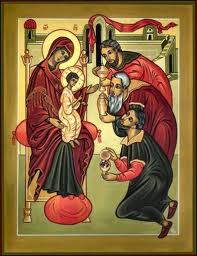
In our Gospel lesson we learn that after Jesus had been born, magi from the east showed up in Jerusalem looking for the king of the Jews.  They had seen “a star when it rose,” and so they were looking for the new born king.  They had seen some astronomical event that they took to be a sign.  The Jewish scriptures that had been brought to the east by the exiles, and these learned men had knowledge of them.  Most likely they were prompted by the statement in Numbers chapter 21, “a star shall come out of Jacob, and the scepter shall rise out of Israel.” Certainly, God was directing these events, just as he then actually guided them by this star to the place where the Christ was.

At the very beginning of Jesus’ life, we see that Gentiles come and bow down before him.  In this event caused by God, we see that Jesus Christ is the Lord of the Gentiles.  He is the Savior of the Gentiles. He is your Lord and Savior.

But this fact would only become absolutely clear after Jesus had completed his saving mission.  Jesus was first and foremost Israel’s Christ. When he sent out the twelve apostles during his earthly ministry he instructed them, “Go nowhere among the Gentiles and enter no town of the Samaritans, but go rather to the lost sheep of the house of Israel.”

          Jesus’ mission was to win forgiveness for all people by dying on the cross and rising from the dead.  In this letter, after describing how the Ephesian Gentiles were not part of Israel, he went on to say, “But now in Christ Jesus you who once were far off have been brought near by the blood of Christ.”  What is true for Jews is also true for Gentiles – the blood of Jesus shed on the cross has given us redemption, the forgiveness of sins.

          Yet a dead Christ would not have been victory for anyone, as we face the death that sin has brought into the world.  And so, on the third day God raised Jesus from the dead.  The risen Lord was with his disciples for forty days, and then was exalted as he ascended into heaven. In the first chapter of this letter the apostle refers to “the immeasurable greatness of his power toward us who believe, according to the working of his great might that he worked in Christ when he raised him from the dead and seated him at his right hand in the heavenly places, far above all rule and authority and power and dominion, and above every name that is named, not only in this age but also in the one to come.”

          After Jesus had risen from the dead, he told the apostles, “All authority in heaven and on earth has been given to me. Go therefore and make disciples of all nations, baptizing them in the name of the Father and of the Son and of the Holy Spirit, teaching them to observe all that I have commanded you. And behold, I am with you always, to the end of the age.”  Our Lord said that they were to make disciples of all nations.  However, the book of Acts describes how many Jewish Christians were slow to understand that the Lord really did mean all nations.  God had to act dramatically through the events that involved Peter and the Gentile Cornelius to show that salvation was for the Gentiles too.

          God had called Paul as an apostle to the Gentiles.  He had given him the revelation of the mystery of Christ – that he truly is the fulfillment of God’s promise that in Abraham’s offspring all nations have been blessed.  Paul’s description of this as a mystery that had to be revealed hits us with the fact that this is not something we originally had. It is a gift of grace that we should never take for granted. 

We were outsiders. We were Gentiles who had no claim to being part of God’s people. But because through baptism and the word the Spirit has called us to faith in the death and resurrection of Jesus Christ Paul can say: “So then you are no longer strangers and aliens, but you are fellow citizens with the saints and members of the household of God, built on the foundation of the apostles and prophets, Christ Jesus himself being the cornerstone.” 


Feast of the Epiphany of Our Lord


Today is the Feast of the Epiphany of our Lord.  On this day we remember and celebrate the visit by the magi.  In this event, God began to reveal the saving glory of Christ which is for all people. 

Scripture:

Now after Jesus was born in Bethlehem of Judea in the days of Herod the king, behold, wise men from the east came to Jerusalem, saying, “Where is he who has been born king of the Jews? For we saw his star when it rose and have come to worship him.”  When Herod the king heard this, he was troubled, and all Jerusalem with him; and assembling all the chief priests and scribes of the people, he inquired of them where the Christ was to be born.  They told him, “In Bethlehem of Judea, for so it is written by the prophet:

 “‘And you, O Bethlehem, in the land of Judah,
are by no means least among the rulers of Judah;
for from you shall come a ruler
who will shepherd my people Israel.’”

 Then Herod summoned the wise men secretly and ascertained from them what time the star had appeared. And he sent them to Bethlehem, saying, “Go and search diligently for the child, and when you have found him, bring me word, that I too may come and worship him.” After listening to the king, they went on their way. And behold, the star that they had seen when it rose went before them until it came to rest over the place where the child was. When they saw the star, they rejoiced exceedingly with great joy. And going into the house they saw the child with Mary his mother, and they fell down and worshiped him. Then, opening their treasures, they offered him gifts, gold and frankincense and myrrh. And being warned in a dream not to return to Herod, they departed to their own country by another way. (Matthew 2:1-12)

 Collect of the Day:

O God, by the leading of a star You made known Your only-begotten Son to the Gentiles.  Lead us, who know You by faith, to enjoy in heaven the fullness of Your divine presence; through the same Jesus Christ, our Lord, who lives with You and the Holy Spirit, one God, now and forever.


Sunday, January 2, 2022

Sermon for the Second Sunday after Christmas - Gen 46:1-7


Christmas 2

                                                                                      Gen 46:1-7

                                                                                       1/2/22


          “Few and evil have been the days of the years of my life.”  That’s what the aged Jacob told Pharaoh when he met the Egyptian king. It certainly is a pessimistic assessment.  Jacob had indeed experienced many hardships. Of course, some of these he had brought upon himself.

          Jacob had swindled his twin brother Esau out of his birthright as the first born for a bowl of soup when Esau was famished.  Later he stole Esau’s blessing from their father Isaac by tricking the old man into thinking that he was in fact Esau.  Rebekah his mother coached Jacob, her favorite son, about how to do this.  When it became clear that Esau intended to kill Jacob, she had Jacob sent back to Haran, in what is today southern Turkey, to live with her brother Laban.

          Jacob left from Beersheba, the place mentioned in our text.  During his journey he had a dream in which he saw a ladder that went from earth to heaven. The angels of God were ascending and descending, and God stood above it. 

Then God said, “I am the LORD, the God of Abraham your father and the God of Isaac. The land on which you lie I will give to you and to your offspring. Your offspring shall be like the dust of the earth, and you shall spread abroad to the west and to the east and to the north and to the south, and in you and your offspring shall all the families of the earth be blessed.” Yahweh repeated the patriarchal promise he had spoken to Abraham and Isaac, as he promised the land of Canaan, many descendants, and that in Jacob’s offspring all people would be blessed. Then he added, “Behold, I am with you and will keep you wherever you go, and will bring you back to this land. For I will not leave you until I have done what I have promised you.”

Jacob met his great love in Rachel, but tricked by his uncle he also had marry her sister Leah.  Through these two women and their handmaids, God blessed Jacob with twelve children – eleven sons and a girl.  In spite of Laban’s schemes, God blessed Jacob with flocks and wealth.

Finally, after twenty years, Yahweh told Jacob that it was time to return to Canaan. Though Jacob was still fearful of Esau, he returned and found that his brother had forgiven him. When back in Canaan, God changed Jacob’s name to Israel and said, “I am God Almighty: be fruitful and multiply. A nation and a company of nations shall come from you, and kings shall come from your own body. The land that I gave to Abraham and Isaac I will give to you, and I will give the land to your offspring after you.” Again, Yahweh promised to give Jacob numerous descendants and to give him the land of Canaan.

Life back in Canaan was not all roses.  Jacob’s beloved Rachel died giving birth to his son Benjamin.  His three oldest sons did things that brought shame upon the family.  But the worst thing was that the blatant favoritism Jacob showed toward Joseph – the son of Rachel – caused his other brothers to despise him.  Their animosity finally prompted them to sell Joseph into slavery and to fake his death.  Jacob was utterly crushed by the loss of his favorite son. 

Of course, Joseph was not really dead.  Instead through a series of events God had continued to bless him.  Having interpreted Pharaoh’s dreams about how seven years of plenty were going to be followed by seven years of famine, Joseph was now second in charge in Egypt. The years of famine had arrived, and it affected the whole region.  Jacob had sent his sons to Egypt to buy food, and in the course of these interactions Joseph had revealed himself.  Jacob had learned that his son was alive, and was a man of great power in Egypt.  At Pharaoh’s bidding, Joseph had now sent wagons to bring Jacob and his family to Egypt where they would have no shortage of food.

Yahweh had promised to give Jacob many descendants.  He had promised to give him the land of Canaan.  And he had promised that in his offspring all nations would be blessed.  Jacob was not a great nation. All told, there were seventy people he could count to his name.  He did not possess the land, and now he was in fact being told to leave it by going to Egypt. And how all families of the earth would be blessed in his offspring was a mystery.

We learn in our text that at that moment God spoke to Jacob.  He said, “I am God, the God of your father. Do not be afraid to go down to Egypt, for there I will make you into a great nation. I myself will go down with you to Egypt, and I will also bring you up again, and Joseph's hand shall close your eyes.”  Just as God had spoken a reassuring promise when Jacob first left Canaan to go to Haran, so now he said that in Egypt he would make Jacob into a great nation. In words that are emphatic in Hebrew he assured Jacob, “I myself will go down with you to Egypt, and I will also bring you up again, and Joseph's hand shall close your eyes.”

At that moment, all Jacob really had was the promise of God.  He numbered all of seventy people and was being told to leave the very land he was supposed to possess.  Clearly, Jacob was hesitant about the idea of leaving, because Yahweh says in our text, “Do not be afraid to go down to Egypt.”

Our lives are often characterized by the need to trust in Scripture’s promise of God’s loving care.  We see this when we face health concerns that make life challenging, or even threaten life itself.  We see this when we face uncertainty about our schooling or career.  We see this when we face setbacks that we did not expect, and our plans are called into question.

At these times, our trust in God wavers. Doubt creeps in about his care.  Faith begins to give way to fear. Now these seem like very natural responses, but they are natural only to the old Adam.  And so we must confess them for what they are – sin in our life.

In accordance with his timing, God kept his promises.  Jacob’s descendants did turn into a numerous people – the people of Israel.  God did bring his people back to the land of Canaan, and he enabled them to conquer it and make it their own.  He turned them into a mighty kingdom under David and Solomon.

But just like us, the nation of Israel did not always trust God.  Faith gave way to fear as they sought out other gods upon whom they could trust. While Israel as God’s servant was meant to be a light to the nations, they instead profaned his name. They were unfaithful, and as God had warned they received the punishment of exile.

But God never forgot his promise repeated to Abraham, Isaac, and Jacob that in their offspring all nations would be blessed.  Matthew begins his Gospel with the words, “The book of the genealogy of Jesus Christ, the son of David, the son of Abraham.”  He sets forth that Jesus is the offspring of Abraham.  Conceived by the Holy Spirit in the virgin Mary, when Joseph took Jesus to be his own, he made him part of the line of David.  He made him the Christ.

In our Gospel lesson we hear about how an angel warned Joseph in a dream that Herod the Great was seeking to kill Jesus.  He told Joseph to flee to Egypt with the child and his mother.  Just as Jacob and his family went down to Egypt, so did Jesus. And then when the time was right, after Herod had died, an angel told Joseph to take Jesus back to Israel.  Matthew tells us, “This was to fulfill what the Lord had spoken by the prophet, ‘Out of Egypt I called my son.’” These words in Hosea chapter eleven describe the experience of the nation Israel.  But we learn here that as the Christ and the Son of God, Jesus fulfills what the nation was meant to be. He is Israel reduced to one. He will pass through the water of his baptism into the temptations of the wilderness.  But where the nation of Israel failed, Jesus will be faithful.

Because our trust in God wavers; because doubt creeps in; because faith begins to give way to fear, Jesus Christ walked the path set forth by the Father in complete faith and trust.  When the angel explained to Joseph why Mary was pregnant he said, “She will bear a son, and you shall call his name Jesus, for he will save his people from their sins.”  Jesus came to bring forgiveness – a forgiveness that is for all people.  He announced how he would do this when he said “the Son of Man came not to be served but to serve, and to give his life as a ransom for many.” 

Jesus offered his life on Good Friday.  He took our sins and was forsaken by God as he received the judgment we deserved.  Our Lord knew the suffering and sacrifice that was ahead of him. But he also knew the victory that the Father would provide through him.  As they prepared to enter Jerusalem he told the disciples, “See, we are going up to Jerusalem. And the Son of Man will be delivered over to the chief priests and scribes, and they will condemn him to death and deliver him over to the Gentiles to be mocked and flogged and crucified, and he will be raised on the third day.”

God the Father raised Jesus from the dead on Easter.  He defeated death, and demonstrated that he is faithful in keeping all of his promises.  Baptized into Jesus, you have the assurance that you are the forgiven child of God.  Because of what God has done in his Son, Jesus Christ, we see that God can be trusted in the midst of all circumstances.  He has given us his Spirit – the Spirit of Christ – to sustain us in that faith as we live each day.

In our text today, God says to Jacob, “I myself will go down with you to Egypt, and I will also bring you up again.”  God promises to be with Jacob.  During this season of Christmas we celebrate the birth of the One whom Isaiah described as Immanuel – God with us.  Jesus has been God with us in the flesh as he lived in this world and died on the cross for our sins.  He is God with us because he has risen from the dead. 

He is God with us now through his Means of Grace as the One who has all authority gives us forgiveness for the times and ways we have failed to trust and believe in God. Through these means his Spirit strengthens us in faith to face the challenges of trusting and believing in this fallen world. And because Jesus is the risen and ascended Lord, we live with hope because Jesus will be God with us in glory on the Last Day.