Monday, July 19, 2021

Mark's thoughts: The life of faith on the road between two ditches - Paul on Justification and Living as Christians


Christian theology and life is lived on a road between two ditches.  On the one side is the ditch that says we must do something in order to receive salvation. This was, of course, the heart of the Reformation struggle to return the Gospel in its truth and purity to the center of the Church’s life.


It’s not surprising that this is a continual temptation for the Church.  After all, we have the law written on our heart – we are “hard wired” to perceive God’s law.  And we know how the Law works – you must do something to get something. There is no such thing as a free lunch.


At the same time, the idea of doing something plays to the vanity of the old man in us. He doesn’t believe that he is blind, dead, and an enemy of God.  Instead led by him – the continuing presence of the sinful nature within us – we want to believe that we can do something in relation to God. We want to believe this good about ourselves.  And on top of this we also can then be proud that we get some credit for the role that we are able to play.


This is accomplished in different ways. In the medieval Church, and continuing in Roman Catholic theology of today, the grace given to us by God makes possible our doing that is part of the reason we receive full salvation.  Many of the forms of Protestantism around us firmly reject this view.  But instead, they place our doing in the work of conversion.  Here, I have the role of deciding by my own powers to believe in Jesus.  In various ways – such as “giving one’s testimony” – this action by the individual becomes a focal point of the Christian life.


The ditch on the other side of the road exists because a person knows with absolute certainty that they are forgiven and saved by God’s grace, on account of Christ, through faith. We know that we are forgiven, and since that is the case there is no real need to worry about how we live. Sure we may sin, but that’s why Jesus died for us – so that sin is forgiven! Here, any talk about how Christians are to live is labeled as “works righteousness” and is considered a threat to the Gospel.  Unfortunately, this is an outlook that has been common in modern Lutheranism.


In his letter to the Romans, the apostle Paul shows us the that the Christian faith is lived by staying on the road between those two ditches.  So in chapter three he has explained why the doing of the law can never be the means by which are justified before God.  He has shown that “all, both Jews and Greeks, are under sin” (3:9). They are under sin’s power.  For this reason he says, “Now we know that whatever the law says it speaks to those who are under the law, so that every mouth may be stopped, and the whole world may be held accountable to God. For by works of the law no human being will be justified in his sight, since through the law comes knowledge of sin” (3:19-20).


Instead of the law and doing, forgiveness and justification are God’s gift. And so Paul goes on to say, “But now the righteousness of God has been manifested apart from the law, although the Law and the Prophets bear witness to it-- the righteousness of God through faith in Jesus Christ for all who believe. For there is no distinction: for all have sinned and fall short of the glory of God, and are justified by his grace as a gift, through the redemption that is in Christ Jesus, whom God put forward as a propitiation by his blood, to be received by faith” (3:21-25).


Jesus Christ, the second Adam, has freed us from the sin and damnation brought by the first Adam’s sin.  Paul says in chapter five: “For as by the one man's disobedience the many were made sinners, so by the one man's obedience the many will be made righteous” (5:19).  God’s grace has abounded in Christ to overcome every sin.


But in chapter six, the apostle declares that the certainty of justification by grace through faith does not mean that we cease to struggle against sin.  He says, “What shall we say then? Are we to continue in sin that grace may abound? By no means! How can we who died to sin still live in it?” (6:1-2).


Paul says the reason for this is because of our baptism into the death of the risen Lord. He goes on to say, “Do you not know that all of us who have been baptized into Christ Jesus were baptized into his death? We were buried therefore with him by baptism into death, in order that, just as Christ was raised from the dead by the glory of the Father, we too might walk in newness of life" (6:3-4).  The apostle ties together the resurrection of Jesus and the life we now live as Christians.  He does this because the Spirit who raised Jesus from the dead is the One who is now at work in us. He has given us regeneration.  He has made us a new creation in Christ.  The Spirit leads us and gives us the strength we need to live according to God’s will.


Salvation in Christ is purely God’s gift.  Faith in Christ is purely God’s gift.  We have nothing to do with either. But when it comes to living as Christians, Paul is clear that this does involve us – our decisions, our effort, our choices.  It is the Spirit who makes this possible, and the Spirit who leads, but we must also follow. That is why Paul writes in 6:12-13: “Let not sin therefore reign in your mortal body, to make you obey its passions. Do not present your members to sin as instruments for unrighteousness, but present yourselves to God as those who have been brought from death to life, and your members to God as instruments for righteousness.”


The apostle wants us to know that we are never free. We are either slaves to sin, or slaves to God and his righteousness.  These lead to very different outcomes. The apostle asks, “Do you not know that if you present yourselves to anyone as obedient slaves, you are slaves of the one whom you obey, either of sin, which leads to death, or of obedience, which leads to righteousness? (6:16).


In the very next verse Paul defines this obedience as he says, “But thanks be to God, that you who were once slaves of sin have become obedient from the heart to the standard of teaching to which you were committed, and, having been set free from sin, have become slaves of righteousness” (6:17).  In an interesting turn of phrase the apostle does not say that they become obedient to the standard of teaching that was handed over to them.  Instead, he says that the believers have been handed over or committed to the teaching.


That describes what has been happening during our live in the faith. We have been handed over to the teaching of the Scriptures which are centered in the Gospel.  We have been handed over to the teaching about our Lord’s death and resurrection for us – we have been handed over to the teaching of the Creed.  We have been handed over to the teaching about our Lord’s Means of Grace: the Word, Baptism, Confession and the Sacrament of the Altar.  We have been handed over to the teaching of the Ten Commandments that describe what a God pleasing life looks like.


This is all true. And Paul lets us know that because this is true we cannot allow ourselves to fall into the ditch of thinking that forgiveness means we are free to live as we like.   He says: “For just as you once presented your members as slaves to impurity and to lawlessness leading to more lawlessness, so now present your members as slaves to righteousness leading to sanctification” (6:19).  We are to present our bodies and lives as slaves to God’s righteousness – his right way of doing things. 


It is the Spirit who makes this possible – the Spirit who gave us new life in baptism.  Presenting ourselves to righteousness means resisting the old man and all that he wants us to do.  As Paul says in chapter eight: “For if you live according to the flesh you will die, but if by the Spirit you put to death the deeds of the body, you will live. For all who are led by the Spirit of God are sons of God” (8:13).


In the latter portion of chapter six, the apostle uses the language of “slavery.”  He says, “For when you were slaves of sin, you were free in regard to righteousness. But what fruit were you getting at that time from the things of which you are now ashamed? For the end of those things is death. But now that you have been set free from sin and have become slaves of God, the fruit you get leads to sanctification and its end, eternal life” (6:21-22).


Slaves of sin or slaves of God - those are the only two options that are available. The one leads to death. The other produces fruit because it is God’s Spirit – the Spirit of Christ – who is at work in us.  This fruit results in sanctification – a life lived according to God’s will.  And Paul says that this has as its end, eternal life.


You were buried with Jesus by baptism into death, in order that, just as Christ was raised from the dead by the glory of the Father, you too might walk in newness of life.  Those who have received the Gospel follow the Spirit’s leading.  By the Spirit’s power they present themselves to God as those who have been brought from death to life, and their members to God as instruments for righteousness.  This produces the fruit of sanctification and has as its end, eternal life.


Seeking to live according to God’s will is a simply part of the life of faith – the life in Christ.  It is part of the life that the results in eternal life.  It cannot be otherwise, because this is the life of the Spirit who has called us to faith and sustains us as the children of God.


Yet after emphasizing this truth throughout this portion of chapter six, the apostle ends the chapter in a way that makes it absolutely clear that this life is not the reason we are saved.  Paul writes, “For the wages of sin is death, but the free gift of God is eternal life in Christ Jesus our Lord.” (6:23).  The wages of sin is death.  Paul uses the word “wages” here because sin earns its “reward.” Sin brings death, and people have been “earning” those wages by sin ever since the Fall of Adam and Eve.


But the apostle tells us that eternal life in Christ Jesus is completely different.  This is a free gift.  It is completely unmerited and undeserved.  It has been won by the death and resurrection of Jesus.  It is received by the faith the Holy Spirit has created.  Our doing has nothing to do with why we are saved.  It is God’s grace given us in Christ.  It is God’s grace given us through the Spirit.  And because this is so, we who live in Christ by the Spirit do not present our members to sin as instruments for unrighteousness, but present ourselves to God as those who have been brought from death to life, and our members to God as instruments for righteousness.  


Sunday, July 11, 2021

Sermon for the Sixth Sunday after Trinity - Mt 5:20-26


        Trinity 6

                                                                                    Mt 5:20-26

                                                                                    7/11/18


            “You have heard that it was said .... But I say you to you….” We hear Jesus make this statement in our Gospel lesson. And actually this is only the first, of six times in a row, when our Lord speaks in this way.  Now in our world, people assert their own opinion all the time, and openly contradict commonly held beliefs or those in positions of authority. They may do so based on facts and expertise. They may do so on the basis of emotion.  But we are not surprised when people do it.

            Things were quite different in the Judaism of the first century world.  There, statements from authorities in the past were handed down in chains of tradition that delivered them to the present day.  This way of tradition is what had authority.  It was especially true among the Pharisees who spoke about “the tradition of the elders.”  Later in the Gospel of Matthew they ask Jesus, “Why do your disciples break the tradition of the elders? For they do not wash their hands when they eat.”

            In the Sermon on the Mount, Jesus hammers home the fact that he doesn’t do things in this way.  He speaks with his own authority as he reveals what the will of God really entails.  And unlike our modern versions of self-assertion that often contradict God’s will, Jesus’ statements are the revelation of God’s true will, because he is the Son of God.

            Jesus begins our text by saying, “For I tell you, unless your righteousness exceeds that of the scribes and Pharisees, you will never enter the kingdom of heaven.”  Now we think of the Pharisees as being very strict and zealous in keeping the Law – the Torah. And this is true – but only true in a particular way.

            The Torah – the Law that God delivered to Moses is very large.  However, much of it sets forth general principles about how a person is to conduct life. It certainly does also contain specific directions. Yet many of these are illustrative of how those principles are to be enacted. And even where it does provide detailed directions, we need to recognize that with the variety and unpredictability of life, there is no way that any law code can address every situation there will arise.

            Thus, there will always be a need to interpret the law and apply those principles to situations that aren’t explicitly addressed by the law.  The Pharisees had done this in their body of oral teaching – the tradition of the elders.  But the tradition of the elders did more than this. First, it added demands that weren’t in the law as it applied rules meant for the priests to people in every day life.  It also interpreted parts of the Torah in ways that made the law easier to keep.  Yes the Pharisees were very strict about keeping the law. But they were very strict about keeping their own interpretation of the law. And many times, that interpretation helped a person get around the strict requirements of the law.

            Six times Jesus states: “You have heard that it was said .... But I say you to you….”  In each case, Jesus takes up a false interpretation of the Torah that was present in Judaism of his day.  So in our text he says: “You have heard that it was said to those of old, ‘You shall not murder; and whoever murders will be liable to judgment.’”  This statement quotes the Fifth Commandment, and then adds that whoever murders will be liable to divine judgment. This is certainly true. In Jesus’ words that follow we learn that the problem is that the interpretation stops there. 

            In this view, “You shall not murder” means “You shall not murder.” So, if you don’t kill someone, you have kept he commandment and are not liable to judgment.  I presume that a similar kind of approach to the law allowed the rich young man to tell Jesus that he had kept this commandment.

            Yet as the divine source of the Ten Commandments, Jesus now gives the full meaning of this statement when he adds: “But I say to you that everyone who is angry with his brother will be liable to judgment; whoever insults his brother will be liable to the council; and whoever says, 'You fool!' will be liable to the hell of fire.” 

Our Lord says that it is not merely the physical act of murder that breaks the Fifth Commandment.  Anger in the heart is the source of all physical harm. Anger breeds hatred and contempt, and hatred does not express itself only in physical ways.  Our translation has “whoever insults his brother.”  The Greek text actually has an Aramaic word here, raka, which means “fool,” quite like the Greek word in the next statement translated as “You fool!”  The word used here in Greek is the one that gives us “moron.” So to put it in more colloquial English, Jesus is saying, “And whoever says, 'Moron!' will be liable to the hell of fire.”

Think about that. Everyone who is angry with his brother will be liable to judgment – and Jesus clearly means eternal judgment. Whoever says, ‘Moron!” will be liable to the hell of fire.  What does life in your family, or with your spouse, or with your friends or co-workers look like when measured against that standard – against God’s standard? Do you get angry with others? Do you speak dismissive and insulting words to others? When you do – and notice I am not even going to entertain the idea about whether we do – this is sin that damns to hell.

Jesus’ words condemn us all. They reveal us to be sinners who must stand before the holy God. They leave no about the outcome.  Left to ourselves, we're on an express elevator to hell, going down.

Jesus’ words certainly reveal the sin in our life. But their presence in the Sermon on the Mount do not cause us to despair. They cause us to confess our sin. They cause us to repent. And they cause us to turn to Jesus in faith.

In Matthew’s Gospel, the Sermon on the Mount is found just after Jesus has begun his public ministry.  Matthew tells us, “From that time Jesus began to preach, saying, ‘Repent, for the kingdom of heaven is at hand.’”  Jesus was announcing that in his person the kingdom of heaven – which is just a Jewish way of saying kingdom of God” was at hand.  Now this is important because Jesus begins the Sermon on the Mount by saying, “Blessed are the poor in spirit, for theirs is the kingdom of heaven.”

The poor in spirit are those who know their sin and confess it.  They don’t defend their sin. They try to ignore their sin. They confess that they have sinned, and that this sin is against God. As David confessed in the Psalms, “Against you, you only, have I sinned and done what is evil in your sight, so that you may be justified in your words and blameless in your judgment.” 

Our Lord says that such people – the poor in spirit – are blessed.  They have the end time blessing now because theirs is the kingdom of heaven. They have received the reign of God.

            Jesus’ words are true of you.  You are poor in spirit.  You know your sin.  You know that you get angry with others.  You know that you speak words that are motivated by hatred.  However, you are blessed because the kingdom of heaven – the reign of God – belongs to you.

            It does because Jesus brought the reign of God by dying on the cross for your sins.  Just before Holy Week, Jesus said, “The Son of Man came not to be served but to serve, and to give his life as a ransom for many.” Jesus Christ suffered and died because you and I are sinners. By that death, he won the forgiveness of sins for us.  Raised from the dead by the Father he has defeated death.  Until Christ returns, sin still brings death. But in God’s eyes we are freed from sin, and death can never hold on to our bodies.  In the resurrected body of Jesus we see what awaits us.

            Because of our crucified and risen Lord, we have forgiveness and salvation.  Through baptism we have shared in Jesus’ saving death.  In baptism the Spirit has caused to be born again – we are a new creation in Christ.  Because the Spirit has done this, he now enables us to live in ways that are true to God’s will.  St. Paul says in our epistle lesson today, “We were buried therefore with him by baptism into death, in order that, just as Christ was raised from the dead by the glory of the Father, we too might walk in newness of life.”

            In our text, Jesus describes what this life looks like for those who have received the kingdom of God. He says, “So if you are offering your gift at the altar and there remember that your brother has something against you, leave your gift there before the altar and go. First be reconciled to your brother, and then come and offer your gift.”  Our Lord speaks about his first century setting when the temple in Jerusalem was still standing.  His point is that we do not let anger fester.  We do not live in anger.  Instead, we seek reconciliation. We forgive one another.  We do this because God has forgiven us in Christ.

            This is true of everyone with whom we interact.  But it is especially true of the people gathered here this morning – those with whom we are about the receive the Sacrament of the Altar. We come to the Sacrament confessing our sins in order to receive forgiveness.  But if we want to receive forgiveness, we must also be willing to forgive others.

            St. Paul told the Corinthians about the Sacrament: “The cup of blessing that we bless, is it not a participation in the blood of Christ? The bread that we break, is it not a participation in the body of Christ? Because there is one bread, we who are many are one body, for we all partake of the one bread.”  We learn that the Sacrament joins us together as the body of Christ.  It is the Sacrament of unity, and as the apostle goes on to teach in chapter eleven, because the body and blood of Christ join us together as one body, we are not to bring any division to the Sacrament. There is no place for anger and failure to forgive among those who commune together.

            This fact is announced in liturgy of the Sacrament by the Pax Domini – the moment when I hold up the body and blood of Christ before you and sing, “The peace of the Lord be with you always.”  On the one hand, this is a declaration that the body of blood of Christ you are about the receive delivers peace with God through the forgiveness of sins.  On the other hand, it is a reminder that we need to be at peace with one another – reconciled – if we are to come forward and receive the Sacrament.

            In our Gospel lesson, Jesus teaches us that the Fifth Commandment is broken not simply by the physical murder of another person.  We sin against God and break the Fifth Commandment when there is anger in our heart and abusive words directed toward others. Because Christ died and rose again to make us sharers in the kingdom of heaven, we confess this sin and cling to the forgiveness won by Christ – forgiveness given to us in Baptism and the Sacrament of the Altar.  As the forgiven people of God, we forgive others as we seek reconciliation.


Tuesday, July 6, 2021

Commemoration of Isaiah


Today we remember and give thanks for the prophet Isaiah.  Isaiah son of Amoz is considered to be the greatest of the writing prophets and is quoted in the New Testament more than any other Old Testament prophet. His name means “Yahweh [the Lord] saves.” Isaiah prophesied to the people of Jerusalem and Judah from about 740 B.C. to 700 B.C. and was a contemporary of the prophets Amos, Hosea, and Micah. Isaiah was a fierce preacher of God’s Law, condemning the sin of idolatry. He was also a comforting proclaimer of the Gospel, repeatedly emphasizing God’s grace and forgiveness. For this he is sometimes called the “Evangelist of the Old Testament.” No prophet more clearly prophesied about the coming Messiah and his saving kingdom. He foretold the Messiah’s miraculous birth (Is 7:14; 9:6), his endless reign (Is 2:1–5; 11:1–16), and his public ministry (Is 61:1–3), but most notably his “Suffering Servant” role and atoning death (52:13—53:12). The apostle John’s description of Isaiah, that Isaiah saw Jesus’ glory and spoke of him (John 12:41), is an apt summary of Isaiah’s prophetic ministry.

Collect of the Day:

Lord God, heavenly Father, through the prophet Isaiah, you continued the prophetic pattern of teaching your people the truth faith and demonstrating through miracles your presence in creation to heal it of its brokenness.  Grant that your Church may see in your Son, our Lord Jesus Christ, the final end-times prophet whose teaching and miracles continue in your Church through the healing medicine of the Gospel and the Sacraments; through Jesus Christ, our Lord, who lives and reigns with You and the Holy Spirit, one God, now and forever.


Sunday, July 4, 2021

Sermon for the Fifth Sunday after Trinity - Lk 5:1-11

Trinity 5

                                                                                       Lk 5:1-11

                                                                                       7/4/21


            Last summer we had to replace the double doors that are at the entrance to our house.  While the right door is the one that opens as you enter the house, the left door can also be unlocked at the top and bottom to open.  Over the years this has proven to be handy as we have brought furniture in and out of the house.

            We had ordered the doors from a store, and when I went to pick them up I was shocked to see how big the assembly really is when it is sitting out on its own and not part of the house.  Thankfully, Jay Will was helping me pick it up in his truck.  While the workers at the store helped us load the doors, they were really too big for the two of us to unload by ourselves at my house.  Jay was able to call a co-worker who lives a couple of houses down from us to come over, and the three of us – with great effort – were able to get it unloaded and put into the garage.

            Once there, one of my kids asked whether I was going to install the doors. I laughed, and replied that no – there was no way that I would be able to do it.  He had seen me do the basic wood working in building the model railroad, and I had involved him in various repair projects around the house to teach him how to do these things.  These experience had led him to the natural assumption: “Dad can do that.”

            But in reality – no – dad can’t do that.  I know that I am able to do basic repairs.  But when you get into real carpentry and construction issues, or plumbing or electrical problems, I have to hire someone who knows how to do those things.  And when they come to do repairs, I certainly don’t try to tell them what to do.  After all, I would only make a fool of myself because I know nothing about how things are to be done.

            In our Gospel lesson this morning, Jesus tells a professional fisherman how to fish.  His words indicate that he knows nothing about how things are to be done.  But because it is a word from Jesus, Peter follows his instruction. And that word produces an amazing catch of fish, that overwhelms Peter as he is in the presence of Jesus.

            Luke begins the Gospel lesson by saying: “On one occasion, while the crowd was pressing in on him to hear the word of God, he was standing by the Lake of Gennesaret.” We learn that the crowd was pressing in on Jesus.  This was obviously a crowed that felt driven to get close to Jesus.  And the reason they wanted to get close to him was to hear the word of God.

            Now we know that Jesus speaks the word of God, because he is the Son of God. We know that he was sent forth by the Father as he was conceived by the Holy Spirit and born of the virgin Mary.  But what is it that has drawn these people to hear Jesus?  What has led this crowd to press in on Jesus in order to hear him?

            In the previous chapters we learn how the Holy Spiri descended upon Jesus at his baptism. Then Luke tells us: “And Jesus returned in the power of the Spirit to Galilee, and a report about him went out through all the surrounding country. And he taught in their synagogues, being glorified by all.”  As the Christ, the One anointed with the Holy Spirit, Jesus went forth with power to carry out the mission the Father had given to him. Jesus announced what this mission was when he read the words of Isaiah chapter 61 in the synagogue at Nazareth, and declared that he was the fulfillment of them. Those words said: "The Spirit of the Lord is upon me, because he has anointed me to proclaim good news to the poor. He has sent me to proclaim liberty to the captives and recovering of sight to the blind, to set at liberty those who are oppressed, to proclaim the year of the Lord's favor.” 

            People recognized that Jesus’ Spirit empowered ministry was different. We learn that when Jesus went to Capernaum and was teaching in the synagogue the people “were astonished at his teaching, for his word possessed authority.”  And it wasn’t just that they sensed the authority of Jesus’ word.  They also saw it at work.

            At the synagogue a man who was demon possessed cried out, “Ha! What have you to do with us, Jesus of Nazareth? Have you come to destroy us? I know who you are--the Holy One of God.” However, Jesus rebuked him, saying, “Be silent and come out of him!” as he cast the demon out. The people were all amazed and said to one another, “What is this word? For with authority and power he commands the unclean spirits, and they come out!” 

Luke tells us that reports about him went out into every place in the surrounding region.

            People could tell that Jesus’ word had authority when he spoke.  They could see that his word had power and authority as he cast out demons and healed people. It was not surprising then, that a crowd was pressing in to hear Jesus as he stood by the Lake of Gennesaret – the Sea of Galilee. There Jesus saw two boats by the lake, where the fishermen had gone out of them and were cleaning their nets.  Jesus got into the boat that belonged to Simon Peter and asked him to put out from the land a little.  Jesus interrupted Peter’s work, but Peter was willing to help as Jesus sat in the boat and taught the people on the shore.

            When Jesus was done speaking, he did something surprising. He told Simon, “Put out into the deep and let down your nets for a catch.”  Jesus, who wasn’t a fisherman, told the professional fisherman how to fish. And what he said was dumb – it made no sense.  Fishermen worked at night on the lake. That was the best time to catch fish with their nets. Peter knew this.  He pointed this out as he said, “Master, we toiled all night and took nothing!”  Yet then he added: “But at your word I will let down the nets.”

            Notice that it was Jesus’ word that caused Peter to do something that he thought was foolish.  And notice too, that he called Jesus “master,” a term that in Luke’s Gospel is only used by those who approach Jesus in faith.  Because it was Jesus’s word, Peter was willing to set aside his own ideas, and do what Jesus had said.

            This same question confronts us every day.  In the very next chapter Jesus teaches: “But I say to you who hear, Love your enemies, do good to those who hate you, bless those who curse you, pray for those who abuse you.”  This too sounds dumb. It makes no sense.  Everyone knows that this is not how you do things. You don’t love, and help and pray for those who wrong you.  Yet this is what Jesus says to do. This is his word.  And so the question is whether we are willing to set aside our own ideas, and do what Jesus has said.

            Peter did what Jesus said, even though it seemed to make no sense. He listened to Jesus’ word and put it into action. Luke tells us, “And when they had done this, they enclosed a large number of fish, and their nets were breaking. They signaled to their partners in the other boat to come and help them. And they came and filled both the boats, so that they began to sink.”  Jesus’ “foolish word” about how to catch fish, produced such a large catch that it was swamping the boats.

            Jesus’ word had produced an incredible event – an astounding catch of fish.  Peter, was astonished by the catch.  Yet his reaction was not joy and excitement. Instead, Luke tells us: “But when Simon Peter saw it, he fell down at Jesus' knees, saying, ‘Depart from me, for I am a sinful man, O Lord.’”  Peter perceived that he was being confronted by God’s work and power in the person of Jesus.  Where before he had called Jesus “master,” now he called him “Lord.” 

            Peter did what people always do in Scripture when they find themselves in the presence of the holy God.  In a profound and overwhelming way he perceived his own sinfulness. He knew he did not belong there.

            This is our experience too when we compare our lives – our thoughts, words, and deeds – to what God has revealed in his word.  Jesus says, “Love your enemies, do good to those who hate you, bless those who curse you, pray for those who abuse you.”  We hear these words and know that we fail to do them. And of course what is true here, is also true again and again in every one of the Ten Commandments.  Our reaction should be no different than that of Peter: “Depart from me, for I am a sinful man, O Lord.” “Depart from me, for I am a sinful woman, O Lord.”

            But Jesus did not come to Peter to drive him away because of his sin.  Instead, he said to him, “Do not be afraid; from now on you will be catching men.”  Jesus told Peter, “Do not be afraid.”  Jesus had not been anointed by the Spirit as the Christ to bring judgment and fear.  Instead, as Isaiah had said of him: “The Spirit of the Lord is upon me, because he has anointed me to proclaim good news to the poor. He has sent me to proclaim liberty to the captives.”  In the verses immediately before our text people wanted Jesus to stay, but he said to them, “I must preach the good news of the kingdom of God to the other towns as well; for I was sent for this purpose.”

            In Jesus we meet the good news of the kingdom of God – the reign of God that has freed us from Satan, sin, and death.  Jesus did not come to condemn sinners.  Instead, he came to be numbered with the transgressors – with us.  He came to take our place as he offered himself as the sacrifice for our sin.  Christ has freed us from sin and death through his death on the cross and resurrection from the dead. This is the good news that he has brought.  This is the good news that he has accomplished for us.

            Do we still struggle with sin? Yes.  Do we still fall? Yes.  But we are not afraid.  Instead, we are repentant.  And repentance is an act of faith. We confess our sin, confident that because of Jesus’ cross and resurrection we are forgiven.  After all, as Jesus said just a couple of weeks ago in the Gospel lesson: “Just so, I tell you, there is joy before the angels of God over one sinner who repents.”

            Jesus said to Peter, “Do not be afraid; from now on you will be catching men.”  Peter believed Jesus’ word.  Instead of asking Jesus to leave, we learn: “And when they had brought their boats to land, they left everything and followed him.”

            Because of the forgiveness and salvation that we receive from our Lord, we now follow him.  This means leaving behind those things that compete with Jesus for our time and attention, as we put Jesus first. It means leaving behind the ways of the world – the ways of anger, vengeance, and payback – as we forgive others and love our enemies.

            And it also means that we seek to share the forgiveness and freedom that we have received with others.  We seek to share the Gospel – the good news of Jesus’ death and resurrection. There will be those who want to hold on to their sin.  There will be those who want to hold on to their false gods.  We recognize that only the Spirit of Christ can call people to faith. But the Spirit works through the word about Christ, and so our job is to speak that word.

            I am no fisherman, but I have done it enough to know that you don’t catch a fish every time you cast the line.  On the other hand, I know that no fish are caught if the line is never cast.  And so our role is to speak about Jesus’ death and resurrection to others, because we know that through him we are included among those who have received forgiveness and salvation.


Friday, July 2, 2021

Feast of the Visitation


Today we celebrate the Feast of the Visitation, the day when Mary went to see Elizabeth after learning that she was pregnant with the Son of God, and that Elizabeth too was pregnant.  The Church observes several days which are connected with the virgin Mary: The Purification of Mary and the Presentation of Our Lord (Feb. 2); The Annunciation of Our Lord (March 25); The Visitation (July 2); and St. Mary, Mother of Our Lord (Aug. 15).  We do this because they are festivals of the Incarnation.  On these days we confess with the Third Ecumenical Council of Ephesus (431 A.D.) that Mary was the Theotokos, the God bearer.  We confess the reality of the incarnation – that Jesus Christ was conceived by the Holy Spirit and born of the virgin Mary as the One who is true God and true man.  In addition, Mary stands out as a great example and model of faith as she trusted God’s Word.

Scripture reading:

In those days Mary arose and went with haste into the hill country, to a town in Judah, and she entered the house of Zechariah and greeted Elizabeth. And when Elizabeth heard the greeting of Mary, the baby leaped in her womb. And Elizabeth was filled with the Holy Spirit, and she exclaimed with a loud cry, “Blessed are you among women, and blessed is the fruit of your womb! And why is this granted to me that the mother of my Lord should come to me? For behold, when the sound of your greeting came to my ears, the baby in my womb leaped for joy. And blessed is she who believed that there would be a fulfillment of what was spoken to her from the Lord” (Luke 1:39-45).


Collect of the Day:

Almighty God, You chose the virgin Mary to be the mother of Your Son and made known through her Your gracious regard for the poor and lowly and despised.  Grant that we may receive Your Word in humility and faith, and so be made one with Jesus Christ, Your Son, our Lord, who lives and reigns with You and the Holy Spirit, one God, now and forever.

Tuesday, June 29, 2021

Feast of St. Peter and St. Paul


Today is the Feast of St. Peter and St. Paul.  Peter was a fisherman who was called as one of the twelve apostles and accompanied Jesus during His entire ministry (Matthew 4:18-22; 10:1-2).  He confessed that Jesus was the Christ, the Son of the living God and Jesus recognized the role of leadership that he would have in the Church (Matthew 16:13-20).  However, he also rebuked Jesus when our Lord predicted His passion (Matthew 16:21-23) and denied Jesus three times (Matthew 26:69-75).  Forgiven by our Lord and commissioned again to care for the flock (John 21:15-19) he was an important leader in the early Church (Acts 2) and God used him to indicate that the Gentiles were being received as part of the people of God (Acts 10).  He wrote two letters that are included in the New Testament.  According to Church tradition, he died a martyr when was crucified upside down in Rome.

Paul, originally named Saul, was a zealous Pharisee who persecuted the Church (Philippians 3:4-6; Galatians 1:13-16; Acts 9:1-2).  The risen Lord appeared to him on the road to Damascus and called him to be an apostle who would proclaim the Gospel to the Gentiles (Acts 9:3-18).  Paul engaged in three missionary journeys to Asia Minor and Greece (Acts 13-14, 16-18, 18-21).  While in Jerusalem he was arrested and then imprisoned by the Romans at Caesarea (Acts 22-26).  As a Roman citizen, he appealed to Caesar and at the end of the Book of Acts he is in Rome under house arrest waiting for his case to be heard (Acts 28:30-31).  Paul wrote thirteen letters that are included in the New Testament.  We have little information about the chronology of the end of Paul’s life (it may be that he was released from Rome and then was later arrested again after doing further missionary work). According to Church tradition, he died a martyr when he was beheaded in Rome 

Scripture reading:

But some men came down from Judea and were teaching the brothers, “Unless you are circumcised according to the custom of Moses, you cannot be saved.” And after Paul and Barnabas had no small dissension and debate with them, Paul and Barnabas and some of the others were appointed to go up to Jerusalem to the apostles and the elders about this question. So, being sent on their way by the church, they passed through both Phoenicia and Samaria, describing in detail the conversion of the Gentiles, and brought great joy to all the brothers. When they came to Jerusalem, they were welcomed by the church and the apostles and the elders, and they declared all that God had done with them. But some believers who belonged to the party of the Pharisees rose up and said, “It is necessary to circumcise them and to order them to keep the law of Moses.”

The apostles and the elders were gathered together to consider this matter. And after there had been much debate, Peter stood up and said to them, “Brothers, you know that in the early days God made a choice among you, that by my mouth the Gentiles should hear the word of the gospel and believe. And God, who knows the heart, bore witness to them, by giving them the Holy Spirit just as he did to us, and he made no distinction between us and them, having cleansed their hearts by faith. Now, therefore, why are you putting God to the test by placing a yoke on the neck of the disciples that neither our fathers nor we have been able to bear? But we believe that we will be saved through the grace of the Lord Jesus, just as they will.” And all the assembly fell silent, and they listened to Barnabas and Paul as they related what signs and wonders God had done through them among the Gentiles. (Acts 15:1-12 ESV)

Collect of the Day

Merciful and eternal God, your holy apostles Peter and Paul received grace and strength to lay down their lives for the sake of your Son.  Strengthen us by your Holy Spirit that we may confess your truth and at all times be ready to lay down our lives for him who laid down his life for us, even Jesus Christ, our Lord, who lives and reigns with You and the Holy Spirit, one God, now and forever.


Monday, June 28, 2021

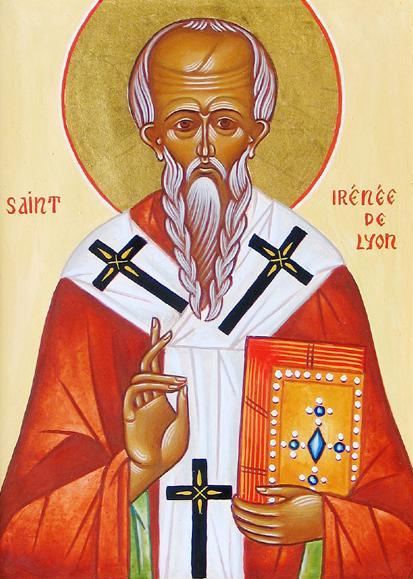
Commemoration of Irenaeus of Lyons, Pastor


Today we remember and give thanks for Irenaeus of Lyons, Pastor.  Irenaeus (ca. A.D. 130-200), believed to be a native of Smyrna (modern Izmir, Turkey), studied in Rome and later became pastor in Lyons, France. Around 177, while Irenaeus was away from Lyons, a fierce persecution of Christians led to the martyrdom of his bishop. Upon Irenaeus' return, he became bishop of Lyons. Among his most famous writings is a work condemning heresies, especially Gnosticism, which denied the goodness of creation. In opposition, Irenaeus confessed that God has redeemed his creation through the incarnation of the Son. Irenaeus also affirmed the teachings of the Scriptures handed down to and through him as being normative for the Church.

Collect of the Day:

Almighty God, You upheld Your servant Irenaeus with strength to confess the truth against every blast of false doctrine.  By Your mercy, keep us steadfast in the true faith, that in constancy we may walk in peace on the way that leads to eternal life through Jesus Christ, our Lord, who lives and reigns with You and the Holy Spirit, one God, now and forever.